
Have you ever wondered why some investors seem to thrive while others struggle? The secret often lies in understanding the natural rhythm of the Real Estate Market. Just like the seasons, property values move in predictable patterns that savvy buyers can use to their advantage.
Success in this field is rarely about luck. Instead, it is about recognizing where we are in the current cycle. By focusing on Strategic Timing, you can position yourself to buy low and sell high with much greater confidence.
Learning to read these trends transforms your approach from guessing to planning. This knowledge is the foundation for every Profitable Investment you will make in your career. Let’s explore how you can master these cycles to build lasting wealth.
Key Takeaways
- Market cycles follow recurring patterns that influence property values.
- Recognizing these phases helps investors make smarter financial decisions.
- Timing your entry and exit points is crucial for maximizing returns.
- Education and research reduce the risks associated with property ownership.
- Consistent growth is achievable when you align your strategy with current trends.
Understanding the Four Phases of the Real Estate Market
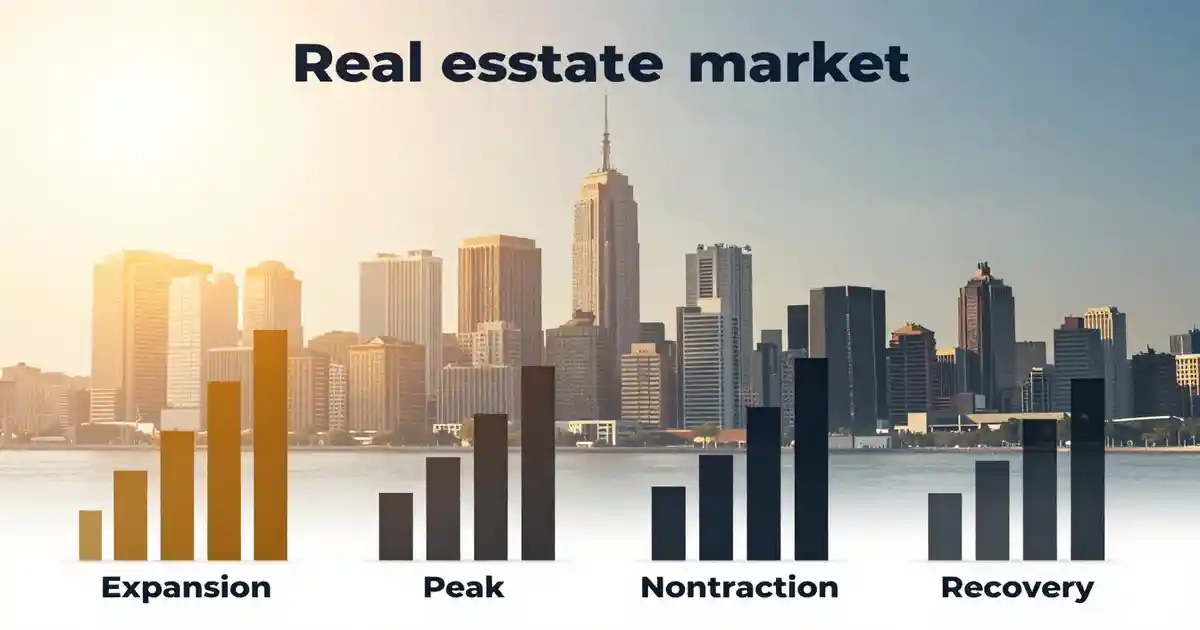
The real estate market operates in cycles, each phase presenting unique opportunities and challenges. Understanding these cycles is crucial for investors to make informed decisions.
The real estate market cycle is typically divided into four phases: recovery, expansion, hyper-supply, and recession. Each phase has distinct characteristics that influence the market’s dynamics.
Recovery Phase
During the recovery phase, the market begins to stabilize after a downturn. Demand starts to increase, and prices begin to rise. This phase is characterized by low vacancy rates and a gradual increase in construction activities.
Expansion Phase
The expansion phase is marked by a significant increase in demand, leading to higher prices and increased construction. This phase is often accompanied by economic growth, low unemployment, and rising incomes.
In the hyper-supply phase, the market experiences an oversupply of properties due to overconstruction. This leads to a decrease in prices and an increase in vacancy rates, making it challenging for investors.
Recession Phase
The recession phase is characterized by a decline in demand, leading to lower prices and higher vacancy rates. This phase often coincides with economic downturns and can present opportunities for long-term investors.
Understanding these phases is essential for investors to strategize their investments effectively. By recognizing the current phase of the market cycle, investors can make informed decisions to maximize their returns.
Key Economic Indicators for Real Estate Market Analysis
Economic indicators play a pivotal role in shaping the real estate market, offering valuable insights for investors and analysts alike. Understanding these indicators is crucial for making informed investment decisions.
The Gross Domestic Product (GDP) growth rate is a significant indicator that affects the real estate market. A growing GDP often leads to increased demand for real estate as the economy expands, creating more jobs and higher incomes. Conversely, a declining GDP can signal a slowdown in the real estate market.
Interest Rates are another critical factor influencing the real estate market. Lower interest rates make borrowing cheaper, thereby increasing demand for housing and potentially driving up prices. On the other hand, higher interest rates can dampen demand by making mortgages more expensive.
Employment Rates also have a substantial impact on the real estate market. High employment rates typically lead to increased housing demand, as more people have the financial stability to purchase or rent homes. Areas with low unemployment rates often see a surge in real estate activity.
Other important economic indicators include inflation rates, consumer confidence indices, and demographic changes. These factors can influence the real estate market in various ways, from affecting housing prices to altering demand patterns.
To conduct thorough market analysis, investors should consider these economic indicators collectively. By doing so, they can gain a more comprehensive understanding of the market’s direction and make more informed investment decisions.
How to Identify Where Your Local Market Stands
To navigate the complexities of real estate investing, it’s essential to identify where your local market stands. Understanding the current phase of your local real estate market is crucial for making informed investment decisions.
The first step in assessing your local market is to analyze the current economic indicators. These include employment rates, population growth, and interest rates, which can significantly influence the real estate market. For instance, a growing population and low unemployment rates can lead to increased demand for housing, thereby driving up property prices.
Another critical aspect is to examine the local real estate trends. This involves looking at historical data on property prices, rental yields, and the average time properties stay on the market. By analyzing these trends, investors can identify patterns and predict future market movements.
Here are some practical tips for conducting a local market analysis:
- Monitor local economic indicators and news that could impact the real estate market.
- Use online real estate platforms to track property prices and rental yields.
- Network with local real estate agents and investors to gain insights into market trends.
- Consider consulting with a financial advisor to understand the broader economic context.
By following these steps and staying informed about the local market conditions, real estate investors can make more strategic decisions and maximize their returns.
Strategic Investment Approaches for Different Market Cycles
Navigating the complexities of real estate market cycles requires a deep understanding of strategic investment approaches tailored to different market phases. Investors who can adapt their strategies to the current market conditions are more likely to maximize their returns and minimize risks.
Understanding Market Cycles is crucial for making informed investment decisions. The real estate market goes through four primary phases: recovery, expansion, hyper-supply, and recession. Each phase presents unique opportunities and challenges for investors.
During the recovery phase, the market is characterized by low prices and high potential for growth. Investors can capitalize on this phase by acquiring properties at discounted rates, anticipating future appreciation. A strategic approach during this phase involves identifying undervalued areas with potential for revitalization.
In the expansion phase, the market experiences rapid growth, driven by increasing demand and limited supply. Investors should focus on developing or renovating properties to meet the growing demand, thereby maximizing their returns through rental income or resale.
The hyper-supply phase is marked by an oversupply of properties, leading to a slowdown in price growth or even a decline. Investors need to be cautious during this phase, focusing on holding onto properties rather than making new acquisitions, and considering strategies to enhance property value.
During the recession phase, the market experiences a downturn, characterized by low demand and high vacancy rates. Strategic investors can look for distressed properties or opportunities to renegotiate lease terms, positioning themselves for future market recovery.
To successfully navigate these phases, investors must remain informed about market trends and economic indicators. This involves continuous market analysis and a flexible investment strategy that can be adjusted according to the prevailing market conditions.
By adopting a strategic investment approach tailored to the current market cycle, investors can enhance their potential for long-term success in the real estate market.
The Role of Real Estate Market Cycles in Portfolio Diversification
Diversifying a portfolio with real estate investments requires a deep understanding of market cycles. Real estate market cycles can significantly impact the overall performance of an investment portfolio. By understanding these cycles, investors can make informed decisions about when to invest in real estate and how to balance their investments across different asset classes.
Real estate investments can provide a hedge against market volatility, as they tend to perform differently than stocks and bonds. According to a report by the National Association of Real Estate Investment Trusts (NAREIT), real estate investments have historically provided long-term returns that are comparable to those of stocks, but with lower volatility.
As Warren Buffett once said, “Price is what you pay. Value is what you get.” Understanding the cycles of the real estate market allows investors to identify opportunities to buy properties at favorable prices and maximize their returns. By incorporating real estate into a diversified portfolio, investors can potentially reduce their overall risk and increase their returns over the long term.
A diversified investment portfolio typically includes a mix of different asset classes, such as stocks, bonds, and real estate. The key to successful diversification is to balance investments across these different classes to manage risk. Real estate investments can be particularly valuable in this regard, as they often perform well during periods when other asset classes are underperforming.
“Diversification is the only free lunch in finance.” –
To achieve effective portfolio diversification through real estate investing, it’s essential to consider the following strategies:
- Investing in different types of real estate, such as residential, commercial, or industrial properties.
- Diversifying geographically by investing in properties located in different regions or countries.
- Using different investment vehicles, such as real estate investment trusts (REITs) or real estate crowdfunding platforms.
By adopting these strategies and staying informed about real estate market cycles, investors can create a more resilient and diversified portfolio that is better equipped to weather market fluctuations.
Common Pitfalls When Timing the Market
Investors often fall into common traps when attempting to time the real estate market, leading to costly mistakes. Understanding these pitfalls is crucial for making informed investment decisions.
One of the primary mistakes investors make is relying too heavily on emotions rather than data-driven market analysis. Emotional decisions can lead to buying at the peak of the market or selling during a downturn, resulting in significant financial losses.
- Overconfidence in one’s ability to predict market trends
- Failure to diversify investment portfolios
- Relying on incomplete or inaccurate market analysis
- Making emotional decisions based on short-term market fluctuations
- Not having a clear exit strategy
To avoid these pitfalls, investors should focus on thorough market analysis and maintain a disciplined investment approach. This includes staying informed about economic indicators, understanding local market trends, and being prepared to adapt to changes in the market cycle.
By being aware of these common pitfalls and taking a strategic approach to investment, investors can better navigate the complexities of real estate market cycles and make more informed decisions.
Leveraging Data and Technology for Smarter Decisions
With the advent of advanced data analytics and technology, investors can now navigate the real estate market with greater precision. The integration of data and technology has transformed the way investors analyze market trends, assess risks, and identify opportunities.
The real estate market is complex and influenced by a myriad of factors, including economic indicators, demographic shifts, and regulatory changes. Advanced data analytics tools can process vast amounts of data to provide insights that were previously inaccessible. These tools enable investors to understand market dynamics better and make more informed decisions.
One of the key technologies driving this change is Artificial Intelligence (AI). AI algorithms can analyze historical data, identify patterns, and predict future market trends. This predictive capability allows investors to anticipate and prepare for shifts in the market, thereby minimizing risks and maximizing returns.
Several platforms and tools are available that leverage data and technology to provide real estate market insights. Some of these include:
- Market data platforms that offer real-time data on property prices, rental yields, and market trends.
- Predictive analytics tools that use machine learning to forecast future market movements.
- Geospatial analysis tools that provide insights into demographic and economic trends at a granular level.
According to a report by a leading real estate research firm, “The use of data analytics in real estate is not just a trend; it’s becoming a necessity for investors who want to stay competitive.” This underscores the importance of embracing data-driven approaches in real estate investment.
“The future of real estate investment lies in the ability to leverage data and technology to make smarter, more informed decisions.”
By harnessing the power of data and technology, investors can gain a competitive edge in the real estate market. It’s essential for investors to stay abreast of the latest technological advancements and data analysis techniques to navigate the market effectively.
Building a Resilient Investment Strategy
Real estate investors must develop a resilient investment approach to thrive across different market conditions. This involves a comprehensive understanding of market dynamics and the ability to adapt to changing economic landscapes.
A key component of a resilient investment strategy is diversification. By spreading investments across various asset classes, such as residential, commercial, and industrial properties, investors can mitigate risks associated with market fluctuations.
Risk management is another critical aspect. This includes thorough market analysis, understanding local economic indicators, and being aware of regulatory changes that could impact investments.
Long-term planning is also essential. Investors should have a clear vision of their investment goals and a strategy to achieve them, regardless of short-term market volatility.
To build a resilient investment strategy, consider the following steps:
- Conduct thorough market research and analysis.
- Diversify your investment portfolio.
- Stay informed about economic indicators and market trends.
- Develop a long-term investment plan.
By adopting these strategies, real estate investors can enhance their ability to navigate market cycles effectively and achieve their investment objectives.
Conclusion
Understanding real estate market cycles is crucial for making informed decisions in Real Estate Investing. By recognizing the four phases of the market and leveraging key economic indicators, investors can identify opportunities for Profitable Investment.
A well-crafted investment strategy that adapts to different market cycles can help mitigate risks and maximize returns. As discussed, using data and technology can further enhance decision-making, allowing investors to stay ahead of the curve.
By applying the insights gained from this article, investors can develop a resilient investment strategy that navigates the complexities of the real estate market. This strategic approach will be instrumental in achieving long-term success in Real Estate Investing.
As the real estate market continues to evolve, staying informed and adaptable is key to securing Profitable Investment opportunities. By doing so, investors can confidently navigate the market and achieve their investment goals.